

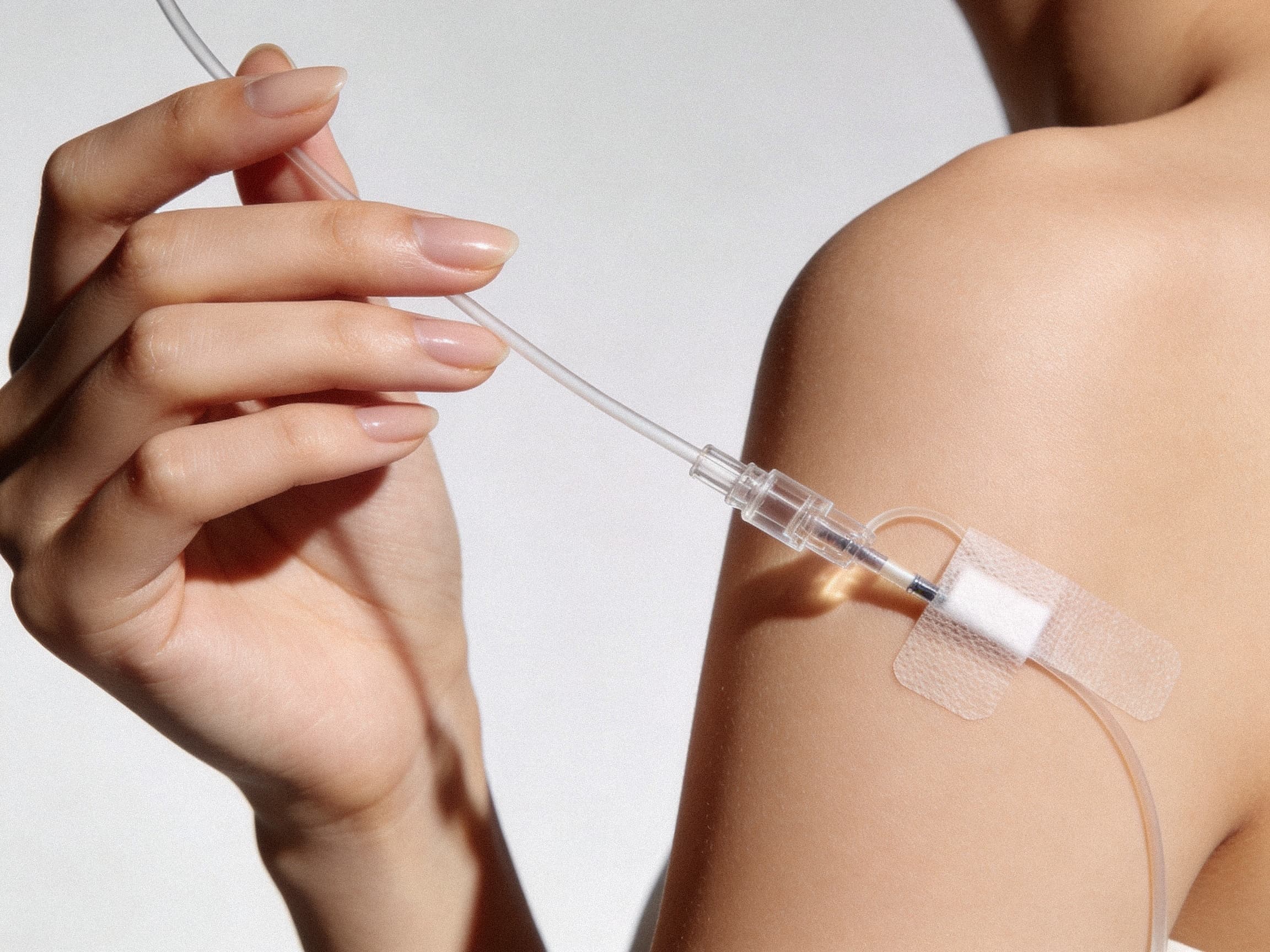
Dehydration, hangover and recovery
Rehydration by infusion restores fluid and electrolytes directly, and anti-nausea or anti-inflammatory support can be added where a clinician judges it appropriate.
Dehydration is a loss of both water and electrolytes, and the two matter in different ways. Symptoms such as headache, nausea, dizziness, poor concentration and muscle cramp arise as much from disturbed sodium, potassium and magnesium as from fluid volume itself, which is why plain water is sometimes a poor remedy on its own. Most everyday dehydration is entirely manageable with oral rehydration, and that is the honest first answer: for mild cases, oral fluids with electrolytes work perfectly well and cost nothing. The case for intravenous rehydration is that it bypasses the gut, which matters specifically when the gut is the problem, as with significant nausea or vomiting where anything swallowed is not retained, or where absorption is impaired. It also delivers a known volume quickly rather than over hours. Alongside fluid, anti-nausea and anti-inflammatory medication can be added where a clinician judges it appropriate. Where dehydration is severe, persistent or accompanied by symptoms suggesting something more serious, the correct destination is urgent medical care rather than an aesthetic clinic.
How we treat it
Every infusion begins with an assessment: what caused the fluid loss, how significant it is, and whether an infusion is genuinely the right response or whether oral rehydration would do just as well. Where it is appropriate, a balanced crystalloid solution restores fluid and electrolytes directly, typically over thirty to sixty minutes, with composition and volume chosen for the individual rather than taken from a fixed menu. Anti-nausea medication is added where nausea is prominent, and anti-inflammatory support where headache and body aches dominate, both prescribed by the treating clinician rather than selected from a list. Observation continues throughout. Where the assessment suggests something beyond simple dehydration, such as persistent vomiting, confusion, chest pain or signs of significant illness, the appropriate step is emergency medical care and treatment here is declined. This is a supportive treatment for a self-limiting problem, and it is described as exactly that.
Medically reviewed by Dr. Sherwin Hariri, MD, Medical Director & Chief Longevity Physician. Last reviewed August 2026.
This page is for information only and is not medical advice. Suitability for any treatment is determined at consultation.
Common questions
How quickly will I feel better?
Many people notice improvement before the infusion finishes, particularly where nausea and headache are prominent and anti-nausea or anti-inflammatory medication has been given. Full recovery depends on the cause. Rehydration addresses the fluid and electrolyte component, which is often but not always the largest part of feeling unwell.
Is this better than just drinking water?
For mild dehydration, no, and we will say so: oral rehydration with electrolytes works perfectly well. Infusion has a clear advantage when the gut is the problem, because significant nausea or vomiting means swallowed fluid is not retained or absorbed, and intravenous delivery bypasses that entirely.
Is an IV drip safe?
In a clinical setting, with a clinician assessing suitability beforehand and supervising throughout, it is a routine and well-tolerated procedure. The main risks are local, such as bruising or irritation at the cannula site. The important safeguard is proper assessment, which is why an infusion is never given without one.
How long does the appointment take?
Usually forty-five to ninety minutes in total, including assessment, cannulation and the infusion itself, which typically runs over thirty to sixty minutes. There is no meaningful recovery period afterwards, and most people return to normal activity straight away.
Other concerns

Start with a conversation